The Critical Importance of EN-1186 and US FDA Standards for Rubber Picking Fingers
In the poultry processing industry, the Rubber Picking Finger is the heart of the defeathering process. While mechanical efficiency and plucking speed often take center stage, “Food Safety” is equally critical. Because these rubber fingers come into direct, high-friction contact with the bird carcass under heat, using substandard rubber poses significant risks—ranging from chemical contamination to pathogen accumulation.
This article explores the importance of the two primary global standards governing food-contact materials: EN-1186 (European Union) and US FDA (United States), and why manufacturers must prioritize them.
Understanding the Standards
1. EN-1186 (European Standard): Focus on Migration Testing
The Principle: This is a series of methods from the European Union used to test the “Overall Migration” of chemical substances from plastics and rubber into food.
The Method: Materials are submerged in various “Food Simulants” (e.g., distilled water, acetic acid, ethanol, olive oil) under specific temperatures and durations. This simulates how the rubber interacts with different food types (aqueous, acidic, alcoholic, or fatty) during processing.
The Goal: To ensure that the quantity of chemicals migrating from the rubber into the food does not exceed the safe “Overall Migration Limit” (OML).
2. US FDA (U.S. Food and Drug Administration): Focus on Safe Ingredients
The Principle: Regulated by the FDA, specifically under 21 CFR 177.2600 (Rubber articles intended for repeated use).
The Method: The FDA establishes a “Positive List” of permitted ingredients. This list specifies which base elastomers (natural or synthetic), accelerators, antioxidants, and fillers are safe for use in manufacturing rubber that touches food. It also dictates the maximum safe quantities for these ingredients.
The Goal: To control safety at the source by regulating the formulation, ensuring the final product is non-toxic and safe for repeated contact with food.

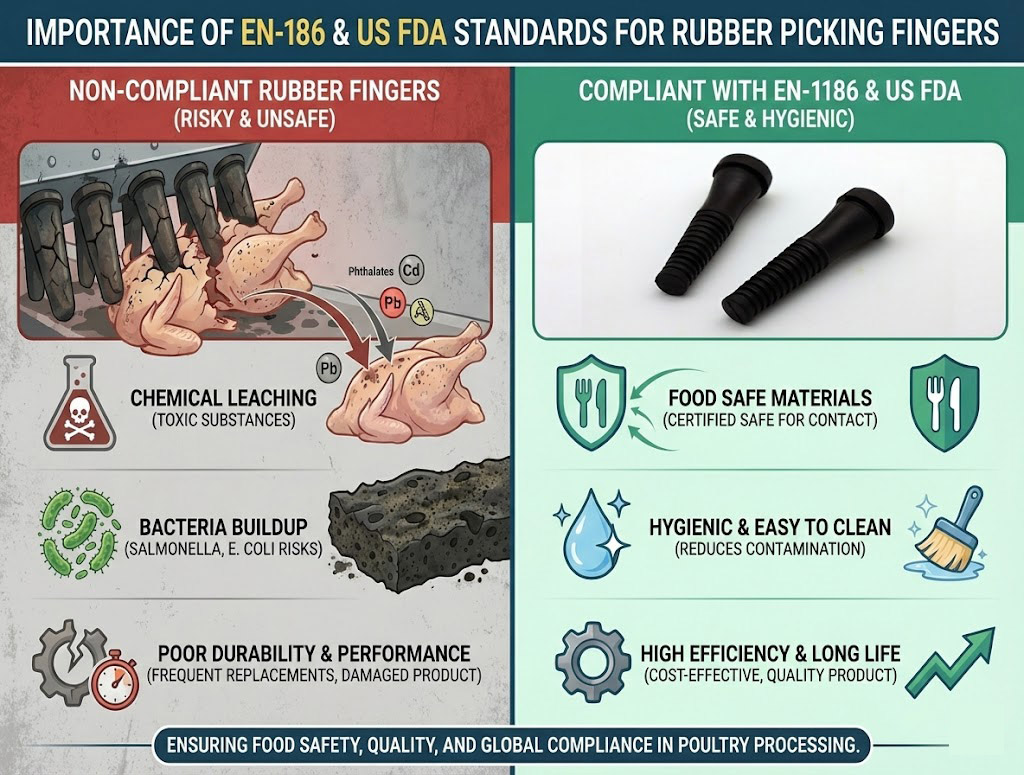
Why Are These Standards Vital for “Rubber Picking Fingers”?
Choosing rubber picking fingers that are certified compliant with EN-1186 or US FDA standards is crucial for several reasons:
1. Maximum Food Safety
Prevents Chemical Leaching: Prevents hazardous chemicals (such as heavy metals or carcinogens) from leaching out of the rubber and contaminating the poultry skin or meat.
Heat Stability: Ensures the material remains stable and does not degrade or release toxins when exposed to the scalding water and friction heat common in plucking machines.
2. Superior Hygiene
Surface Integrity: Compliant food-grade rubber typically has a higher quality surface finish. It resists cracking and becoming porous, eliminating hiding spots for organic debris (blood, feathers, fat).
Pathogen Control: A smooth, intact surface prevents the formation of biofilms, significantly reducing the risk of cross-contamination from dangerous bacteria like Salmonella or E. coli.
3. Efficiency and Cost-Effectiveness
Durability: Although food-grade fingers may have a higher initial cost, they are formulated to withstand fats and cleaning chemicals better than cheap, non-standard rubber. This results in a longer lifespan and less frequent replacement.
Product Quality: The rubber provides the correct flexibility and shore hardness, ensuring efficient plucking without damaging the bird’s skin or bruising the meat (downgrading the product).
4. Global Compliance and Trust
Export Requirements: Compliance is often a non-negotiable requirement for exporting poultry products to major markets like the EU and the USA.
Brand Reputation: Using certified food-safe equipment demonstrates a commitment to quality and consumer safety, building trust with partners and end-consumers.
Investing in Rubber Picking Fingers that meet EN-1186 or US FDA standards is not merely a regulatory checkbox; it is a strategic investment in business sustainability. It protects consumer health, ensures product quality, and opens doors to global markets. Ignoring these standards for a small cost saving can lead to contamination issues that cause immeasurable damage to a brand’s reputation.